I get this question all the time: “Anthony, what exactly is usable square footage?”
It’s a great question—and it’s a huge deal when it comes to pricing homes. Whether you're a real estate agent or a loan officer, getting it wrong could lead to overpricing or undervaluing a home, and no one wants that deal-killer at the finish line.
So, let’s dive in and break it down in a way that’s not only simple but fun. We’ll cover what makes square footage “usable” and why it’s crucial to follow the ANSI measuring guidelines to avoid any nasty surprises during an appraisal.
What is Usable Square Footage?
This is where we get technical—but I promise, it’s not boring. Usable square footage, according to the International Residential Code (IRC) and ANSI (American National Standards Institute), has some strict rules:
• The ceiling height needs to be at least seven feet in 50% of the room. • No part of the room should dip below five feet in height. If it does—sorry, it doesn’t count. • Usable square footage must be above grade. Yep, your finished basement doesn’t usually count unless your local guidelines say otherwise.
Let’s use an example: See that sloping ceiling? The area where it drops below five feet? Doesn’t count. But the center area, where the height meets the IRC code? That’s what you include in your square footage for appraisals.
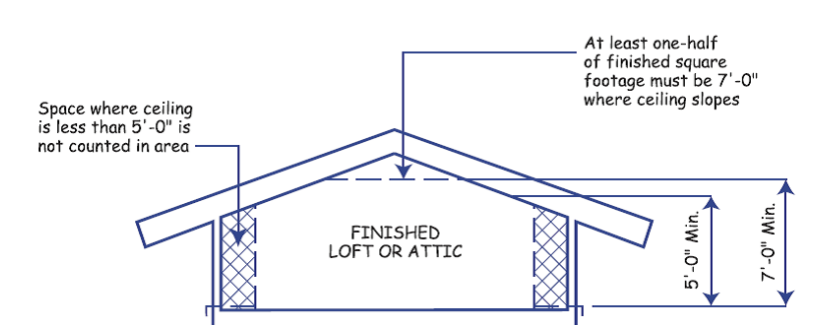
Key ANSI Guidelines for Measuring Usable Square Footage:
Here’s your cheat sheet for usable square footage:
- Above-Grade Living Areas: Spaces must be finished, fully enclosed, and have at least seven feet of ceiling height in 50% of the room. Even quirky half-stories, attics, and lofts can count—if they meet the height rule.
- Below-Grade Areas: Finished basements usually don’t count in the gross living area (GLA). ANSI rules say no unless local guidelines say yes.
- Wall and Ceiling Measurements: For single-family homes, measure to the outside of the walls. For condos or townhomes, measure to the middle of shared walls.
- Open Areas and Staircases: Only count these spaces once—don’t try to sneak them into the square footage of both floors!
Why Does It Matter?
Because if you miscalculate, the appraisal could blow up the deal. No one wants to hear, “Oops, I overestimated the square footage by 200 square feet.”
Quick Tips for Agents & Loan Officers:
- Measure Twice, Check Once: Before you list that house, make sure you’re good with the ANSI and IRC standards, especially for tricky spaces like attics.
- Double-Check Before You Include: Unsure if a room counts? Whip out the measuring tape and check that ceiling height—don’t leave it to chance.
- Communicate with Your Appraiser: Have any borderline rooms? Ask your appraiser beforehand to make sure you’re on the same page. No one likes last-minute surprises.
Save Your Clients Time and Money
Getting the square footage right from the start saves everyone hassle. Your clients will trust you more when they see you’ve done your homework, and you’ll avoid those awkward moments when an appraiser says, “That room doesn’t count.”
Pro Tip: Before pricing or listing a home, always check ceiling heights. A quick double-check could save your client thousands and prevent a deal from crashing last minute.
Bonus: Check out my video on this topic for more details: Watch Here
Anthony Young
Real Estate Appraiser & Educator
Covering Northern California & the San Francisco Bay Area
IG: @Anthony_young_appraiser
Phone: 925-999-0144
Website: ValuedAudit.com


Responses